In the fast-paced world of direct-to-consumer e-commerce, inventory is more than just stock on a shelf. It represents your most significant asset and, simultaneously, your greatest potential liability. Managing it effectively unlocks cash flow, boosts customer satisfaction, and fuels profitable growth. Mismanagement, however, leads to capital trapped in slow-moving products and lost revenue from frustrating stockouts.
The critical difference between thriving and struggling D2C brands often lies in a clear, actionable inventory strategy. This guide moves beyond generic advice to provide a comprehensive roundup of the best practices for inventory management, specifically tailored for Shopify merchants and their operations teams. We are not just listing concepts; we are providing operational playbooks.
You will learn how to implement proven methods that create a resilient and efficient supply chain. We will cover everything from sophisticated demand forecasting and strategic replenishment rules to precise safety stock calculations and tactical SKU assortment. You will also get actionable insights on defining workflow ownership and leveraging technology to automate and optimize.
This is your blueprint for transforming inventory from a constant source of stress into a powerful competitive advantage. We will explore ten core strategies, including Just-In-Time (JIT), ABC analysis, and Economic Order Quantity (EOQ), providing the details needed to put these principles into practice immediately. Let's dive into the methodologies that build a foundation for scalable success.
Just-In-Time (JIT) is a lean inventory strategy focused on increasing efficiency and decreasing waste by receiving goods only as they are needed in the production process or to fulfill customer orders. Instead of holding large amounts of stock in a warehouse, JIT synchronizes your supply chain so that inventory arrives exactly when required. This approach dramatically reduces holding costs, minimizes the risk of deadstock, and improves cash flow by freeing up capital that would otherwise be tied up in unsold products.

Popularized by Toyota in its manufacturing system, the principles of JIT have been successfully adapted by companies like Dell, which builds computers to order, and fast-fashion giant Zara, which leverages JIT for rapid inventory turnover. For D2C brands, this means aligning production schedules and supplier deliveries tightly with real-time sales data.
JIT is most effective for businesses with predictable demand patterns, reliable supplier networks, and shorter production lead times. It's an ideal strategy for brands selling products with a short shelf life (like fresh food or cosmetics), fast-changing trends (fashion), or customizable, made-to-order items. However, it requires a high degree of precision and is less suitable for businesses facing volatile demand or long, unreliable supply chains.
Implementing a JIT system requires meticulous planning and strong partnerships. Here are actionable steps to make it work for your D2C brand:
ABC analysis is a powerful inventory categorization technique based on the Pareto Principle, which suggests that roughly 80% of effects come from 20% of causes. Applied to inventory, it means a small percentage of your items account for a large percentage of your revenue. This method classifies your SKUs into three categories (A, B, and C) based on their consumption value, allowing you to prioritize management efforts where they matter most.

For a D2C brand, this means identifying your "A" items, which are your best-sellers that drive the majority of your profit. "B" items are moderately important, and "C" items are your low-value, slow-moving products. By segmenting your inventory this way, you can allocate resources like capital, warehouse space, and management time more strategically, moving away from a one-size-fits-all approach.
This method is essential for businesses with a diverse range of SKUs, especially when resources are limited. It's highly effective for retailers managing thousands of products, manufacturing facilities with varied component costs, or any D2C brand looking to optimize stock levels without overinvesting in less critical items. It provides a clear framework for making data-driven decisions on everything from reorder points to marketing spend.
Implementing this system requires a straightforward, data-centric approach. Here’s how to apply it to your operations for better inventory control:
The Economic Order Quantity (EOQ) is a classic inventory management formula designed to identify the ideal order size a business should purchase to minimize its total inventory costs. It achieves this by finding the perfect equilibrium between ordering costs (like shipping and processing fees) and holding costs (the expenses of storing inventory). By calculating the EOQ, you can avoid tying up excessive cash in stock while also preventing frequent, costly reorders, making it a cornerstone of efficient inventory control.
This formula was first developed by Ford W. Harris in 1913 and has been a fundamental tool for businesses ranging from fast-moving consumer goods (FMCG) distributors to e-commerce warehouses. For a D2C brand, EOQ helps answer the critical question: "How much of this product should I order at one time?" It provides a data-driven answer, moving you away from guesswork and toward a more profitable replenishment strategy.
EOQ is most powerful for businesses with relatively stable demand and predictable costs. It's particularly effective for top-selling, non-perishable products where both ordering and holding costs can be accurately estimated. It is ideal for Shopify merchants looking to optimize replenishment for their core product catalog, ensuring they maintain high availability without overstocking. However, it's less suitable for products with highly seasonal or volatile demand, or for items subject to frequent price changes.
Successfully using the EOQ model requires accurate data and regular reviews. Here are actionable steps to apply it to your operations:
Safety stock is a buffer inventory strategy that involves holding extra stock to protect against unforeseen demand spikes and supply chain disruptions. This additional inventory acts as a crucial insurance policy against stockouts, while reorder points are the specific inventory levels that trigger a new purchase order. By setting an automated reorder point, you ensure that replenishment happens before you dip into your safety stock, maintaining a consistent customer experience.
This method is fundamental for any D2C brand aiming to balance inventory availability with carrying costs. For example, a food and beverage distributor might increase safety stock for a popular seasonal drink to avoid missing sales during peak demand, while a pharmaceutical company will maintain high safety stock levels for critical medicines to prevent life-threatening shortages.
This strategy is essential for nearly every D2C business, but it's especially critical for brands with variable demand, long or unpredictable supplier lead times, or products with high stockout costs (both in lost revenue and customer loyalty). If your supply chain is prone to delays or your sales forecasts have a high margin of error, implementing a calculated safety stock is a non-negotiable part of your inventory management.
Implementing safety stock and reorder points requires a data-driven approach, not guesswork. Here are actionable steps to optimize this for your Shopify store:
First-In-First-Out (FIFO) is a fundamental inventory management and valuation method where the first goods purchased are the first ones sold. This approach assumes that the oldest inventory items in your warehouse are shipped out before newer stock, creating a logical and chronological flow of goods. By prioritizing the sale of older products, FIFO is crucial for preventing spoilage, obsolescence, and product degradation, which directly protects your bottom line and ensures customer satisfaction.
This method is standard practice in industries dealing with perishable goods, such as food and beverage companies, but its principles are equally valuable for brands in cosmetics, electronics, or even apparel where trends and packaging can change. For D2C brands, implementing FIFO ensures that customers always receive the freshest, most current version of your product, which is a key component of a premium brand experience.
FIFO is essential for any business selling products with a limited shelf life or those that can become outdated. This includes food, cosmetics, pharmaceuticals, supplements, and products with version updates or seasonal packaging. It's also a valuable strategy for any brand that wants to maintain high product quality standards and avoid the financial losses associated with dead stock or heavily discounted, aging inventory. FIFO is less critical for products with no expiration date, like hardware or basic home goods, but it remains a solid organizational principle.
A successful FIFO system relies on disciplined warehouse organization and accurate tracking. Here’s how to apply it to your D2C operations:
Demand forecasting is the strategic process of predicting future sales and inventory needs based on historical data, market trends, and seasonal patterns. Accurate forecasting is the bedrock of efficient inventory management, allowing you to make informed decisions about purchasing, production, and stock allocation. By anticipating customer demand, you can significantly reduce the risks of both costly overstock situations and sales-killing stockouts, optimizing cash flow and ensuring customer satisfaction.
This practice is essential for nearly every business, from consumer packaged goods manufacturers planning production cycles to fast-fashion retailers like H&M anticipating the next trend. Amazon, for example, uses sophisticated predictive analytics to position inventory in warehouses closer to customers even before they place an order, drastically cutting down delivery times.
Demand forecasting is a non-negotiable practice for any D2C brand aiming for scalable growth. It is especially critical for businesses with seasonal products (like swimwear or holiday-themed goods), products with long lead times, or those planning to launch marketing campaigns that are expected to cause a significant sales spike. If your brand experiences fluctuating sales or is looking to expand into new markets, a robust forecasting model is essential.
Effective forecasting blends data analysis with strategic planning. It's a core component of the best practices for inventory management that separates thriving brands from struggling ones. Here’s how to get it right:
Vendor-Managed Inventory (VMI) is a collaborative supply chain strategy where you shift the responsibility of managing and replenishing specific stock levels to your suppliers. In this model, the vendor monitors your inventory data, often through shared systems, and automatically ships products to maintain pre-agreed stock levels. This partnership offloads a significant portion of the inventory planning burden from your team, ensuring a steady supply of goods without constant manual oversight.
This approach transforms the traditional buyer-supplier relationship into a symbiotic partnership. For instance, global CPG giants like Procter & Gamble use VMI with retailers like Walmart to manage shelf stock of high-volume products, ensuring items are rarely out of stock. Similarly, Coca-Cola often manages the inventory of its beverages directly in retail stores, optimizing stock based on real-time sales. For a D2C brand, this means letting a key supplier manage the stock of a critical component or a best-selling product.
VMI is ideal for D2C brands that have established strong, trusting relationships with key suppliers and deal with high-volume, predictable products. It’s particularly effective for essential items where stockouts would cause significant disruption or for products with consistent demand patterns. If you find your team spending excessive time on purchase order management for staple products, VMI can free up valuable resources for more strategic activities.
A successful VMI partnership hinges on trust, transparency, and technology. Here are the crucial steps to implement it for your D2C brand:
Cycle counting is a perpetual inventory auditing method where a small subset of inventory is counted on a specific day without disrupting warehouse operations. Unlike a traditional annual physical count that requires a full operational shutdown, cycle counting integrates inventory verification into daily workflows. This continuous approach helps maintain a high level of inventory accuracy year-round, identifies discrepancies as they occur, and minimizes the operational pain of a massive single audit.
This method transforms inventory auditing from a dreaded annual event into a manageable, routine task. For example, a distribution center might count its highest-value (Class A) items monthly, its mid-value (Class B) items quarterly, and its low-value (Class C) items semi-annually. This targeted approach focuses effort where it matters most, ensuring that your most critical products are always accurately accounted for.
Cycle counting is a foundational practice for any D2C brand that holds inventory, regardless of size. It is especially critical for businesses with a large number of SKUs, high transaction volumes, or products with a high risk of theft or damage. If your brand struggles with frequent stockouts despite your system showing available inventory, or if you consistently find surprise overstock, cycle counting can help diagnose and fix the root causes of these data inaccuracies.
A successful cycle counting program is built on consistency and a systematic approach. Here’s how to integrate it into your operations:
Dropshipping is a retail fulfillment model where a store doesn't keep the products it sells in stock. Instead, when a store sells a product, it purchases the item from a third party, a manufacturer or wholesaler, and has it shipped directly to the customer. This completely removes the need for the merchant to handle the product directly, eliminating warehouse costs, capital investment in stock, and the complexities of order packing and shipping.
This model allows for immense scalability and a virtually unlimited product catalog without the financial risk of holding inventory. Brands like Wayfair built their empires on a dropshipping foundation, offering a vast selection of home goods without owning warehouses full of furniture. Similarly, print-on-demand services like Printful allow creators to sell custom apparel and accessories with zero upfront inventory investment, making it a powerful strategy for niche D2C brands.
Dropshipping is an excellent strategy for new entrepreneurs looking to test product ideas with minimal risk, or for established brands wanting to expand their product catalog without a significant capital outlay. It's ideal for businesses selling large, bulky items (like furniture) or a wide variety of SKUs where holding stock is impractical. It's also effective for testing market demand for new products before committing to a large purchase order.
Success in dropshipping hinges on supplier reliability and operational excellence. Here are key steps to integrate this model into your best practices for inventory management:
Inventory management software refers to the digital systems and tools designed to automate inventory tracking, management, and optimization. These powerful platforms, which include Warehouse Management Systems (WMS) and specialized inventory apps, provide real-time visibility and control over your entire stock, from procurement to fulfillment. By centralizing data, they eliminate manual errors, streamline workflows, and empower businesses to make smarter, data-driven decisions.
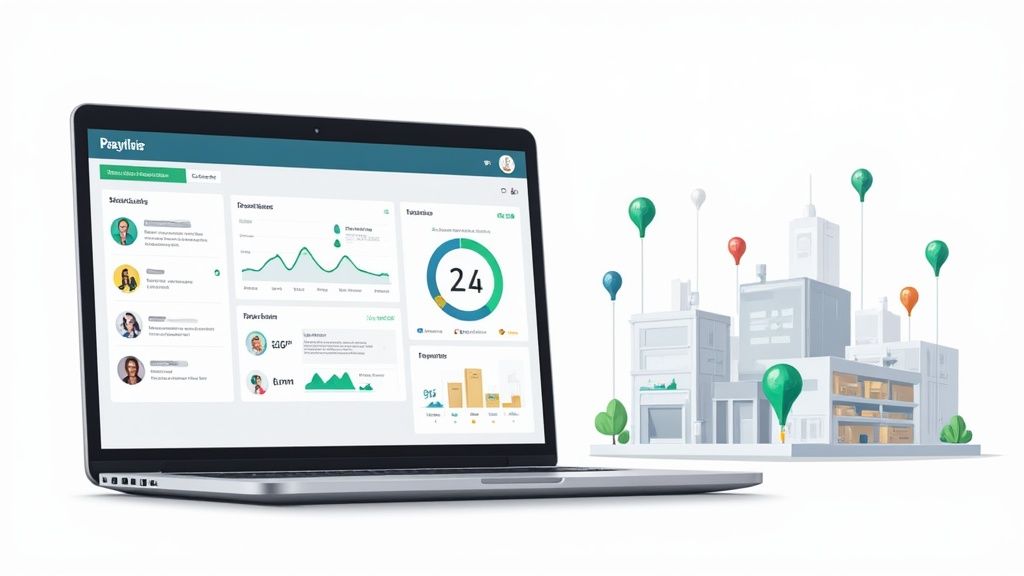
Retail giants like Walmart (with its Retail Link system) and Amazon have long used sophisticated technology to gain a competitive edge. For modern D2C brands, accessible and scalable software brings this same power to their fingertips, allowing them to manage complex omnichannel operations, automate reordering, and optimize stock levels across multiple sales channels and locations.
Implementing dedicated software is crucial once your D2C brand moves beyond a handful of SKUs or begins selling across multiple channels (e.g., Shopify, Amazon, retail). It becomes non-negotiable when manual tracking with spreadsheets leads to stockouts, overstocks, or fulfillment errors. This technology is essential for brands aiming to scale operations, improve efficiency, and gain deep insights into sales trends and product performance.
Choosing and implementing the right software is a strategic process that can transform your operations. Here are actionable steps for success:
| Strategy | Implementation complexity | Resource requirements | Expected outcomes | Ideal use cases | Key advantages |
|---|---|---|---|---|---|
| Just-In-Time (JIT) Inventory Management | High — tight coordination, real-time systems | Reliable suppliers, advanced tracking, strong logistics | Low carrying costs, lean inventory, improved cash flow | Manufacturers, build-to-order, fast-fashion retailers | Minimal inventory, less obsolescence, quality focus |
| ABC Analysis (Pareto Analysis) | Low–Medium — data analysis and categorization | Accurate usage & cost data, periodic reviews | Focused control on high-value items, optimized effort | Retail with many SKUs, warehouses, hospitals | Simple to implement, targets most impactful SKUs |
| Economic Order Quantity (EOQ) | Low — formula-driven, periodic recalculation | Accurate demand, ordering & holding cost data | Optimized order size, lower total ordering/holding cost | Stable-demand items (FMCG, supplies, restaurants) | Objective cost-minimizing order quantity |
| Safety Stock and Reorder Points | Medium — statistical calculations and policy | Forecasting data, monitoring systems, safety capital | Fewer stockouts, consistent service levels | Variable-demand products, critical/seasonal items | Protects against variability, maintains SLAs |
| First-In-First-Out (FIFO) | Medium — process discipline and tracking | Storage layout, tracking tech (barcodes/RFID), training | Reduced spoilage/obsolescence, accurate freshness | Perishables, pharmaceuticals, food service | Prevents spoilage, improves traceability and valuation |
| Demand Forecasting and Planning | High — analytics, modeling, continuous updates | Historical data, forecasting tools, skilled analysts | Better demand accuracy, fewer stockouts/excess stock | Retail chains, e-commerce, CPG, seasonal businesses | Improves planning and supplier coordination |
| Vendor-Managed Inventory (VMI) | High — contractual collaboration and integration | Integrated IT, shared data, SLAs, trust with suppliers | Reduced customer holding costs, improved fill rates | Large retailers, CPG partnerships, hospitals | Lowers admin burden, improves replenishment accuracy |
| Cycle Counting and Physical Audits | Medium — ongoing schedule and reconciliation | Trained staff, scanning/RFID, WMS integration | High inventory accuracy, early discrepancy detection | Warehouses, high-SKU retailers, medical supply | Continuous accuracy, less disruption than annual counts |
| Dropshipping and Direct Fulfillment | Low–Medium — supplier integrations and processes | Reliable suppliers, order management, returns processes | Minimal inventory investment, scalable fulfillment | Start-ups, niche e-commerce, multi-channel sellers | Low capital requirement, rapid scaling capability |
| Inventory Management Software & Technology | High — implementation, integration, change mgmt | Budget for software, IT support, data hygiene, training | Real-time visibility, automation, improved KPIs | Multi-location retailers, complex supply chains, enterprises | Automation, scalability, actionable analytics |
Navigating the landscape of inventory management can feel like orchestrating a complex symphony. From the precision of Just-In-Time (JIT) to the strategic prioritization of ABC Analysis, and the financial discipline of the Economic Order Quantity (EOQ) formula, each practice we've explored is a powerful instrument on its own. However, true mastery lies not in using one instrument, but in conducting them all in harmony to create a resilient, profitable, and scalable D2C operation.
The goal isn't to pick a single "best" method. Instead, it's about building a blended, intelligent system tailored to your brand's unique rhythm. For a fast-growing fashion brand, this could mean using ABC analysis to identify your hero SKUs, applying aggressive JIT principles to seasonal trend items, and maintaining calculated safety stock for your evergreen bestsellers. For a gourmet food company, the focus might be on strict FIFO adherence to ensure freshness, combined with sophisticated demand forecasting to manage perishability and prevent waste.
Implementing these best practices for inventory management transforms abstract concepts into tangible financial outcomes. Effective inventory control is the engine of a healthy cash flow cycle. When you accurately calculate reorder points and safety stock, you aren't just preventing stockouts; you are unlocking capital that would otherwise be trapped in slow-moving or excess inventory. This is capital that can be reinvested into marketing, product development, or expanding your team.
Consider the ripple effect of mastering these disciplines:
The primary obstacle for most D2C brands isn't a lack of knowledge, but a lack of tools to effectively implement that knowledge. Managing dynamic safety stock, forecasting demand for hundreds of SKUs, and performing ABC analysis across multiple channels in a spreadsheet is not just inefficient; it's a recipe for error. Manual systems are reactive, slow, and incapable of detecting the subtle trends and anomalies that signal a major shift in customer demand.
Key Insight: The true power of these inventory management best practices is unlocked when they are automated and integrated. A strategy that relies on manual updates and guesswork will always lag behind the speed of modern e-commerce.
This is where technology becomes a non-negotiable partner. The most successful brands don't just adopt best practices; they adopt the systems that make executing those practices seamless and intelligent. By leveraging AI-powered platforms, you can move from a state of constant reaction to one of proactive, data-driven planning. These tools handle the complex calculations, identify patterns your team might miss, and serve up actionable recommendations, turning your inventory into a strategic asset for growth.
Adopting these best practices for inventory management is simpler when you have the right tools to automate the complexity. Tociny.ai replaces manual guesswork in spreadsheets with powerful, AI-driven insights, generating precise recommendations for forecasting, replenishment, and assortment. Plan your inventory with confidence and scale your D2C brand profitably by joining the private beta at Tociny.ai.
Tociny is in private beta — we’re onboarding a few select stores right now.
Book a short call to get early access and exclusive insights.